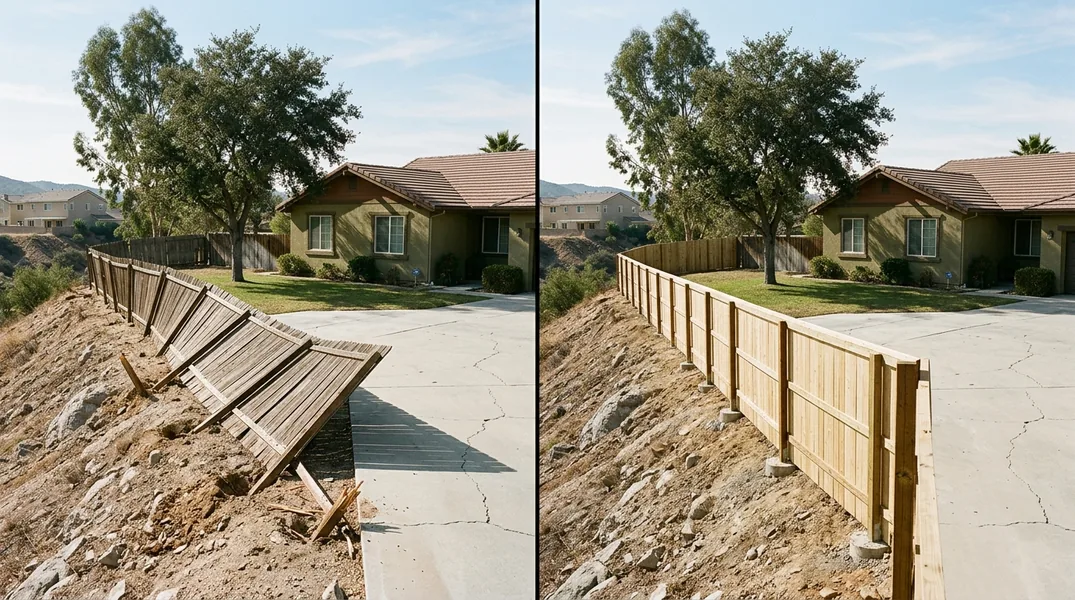
Understanding Retaining Walls and Fence Placement in Los Angeles
Living on a hillside or canyon lot in Los Angeles offers stunning views and unique landscape features, but it also presents distinct challenges when planning a fence installation. Retaining walls are a common fixture on sloped properties, designed to hold back soil and prevent erosion. When you're ready to add a fence to your property, understanding how these structures interact with your boundary line is essential. Many homeowners don't realize that a retaining wall may not sit exactly on the property line, which can complicate fence placement and create questions about easements, maintenance responsibilities, and legal boundaries.
The relationship between your retaining wall and your fence depends on several factors: the wall's age, who built it, whether it's on your property or your neighbor's, and local building codes. In some cases, a retaining wall may be entirely on your side of the property line, while in others it may straddle the boundary or belong primarily to your neighbor. Before you begin any Wood & Privacy Fence Installation project on a hillside lot, it's crucial to verify these details through a professional survey and consultation with local building departments.
Who Pays for Fence Between Neighbors on Sloped Properties
One of the most common questions homeowners ask is, 'Who pays for the fence between neighbors?' The answer on hillside and canyon properties is more complex than on flat terrain. California's 'good neighbor fence law' doesn't mandate that neighbors split costs equally, but it does establish guidelines for shared boundary fences. However, when a retaining wall is involved, the situation becomes layered. If the retaining wall is serving a structural purpose for both properties, both neighbors may have a vested interest in its maintenance and any fence additions built upon or near it.
Generally speaking, if you initiate the fence project and your neighbor hasn't requested one, you're typically responsible for the cost. However, if both neighbors agree to share the expense, you can formalize this with a written agreement. When retaining walls are part of the equation, costs can escalate significantly because you may need to build the fence in a way that doesn't compromise the wall's structural integrity. Some neighbors split costs fifty-fifty, while others negotiate based on who benefits more from the fence or who owns the retaining wall. We recommend discussing this openly with your neighbor before moving forward and getting everything in writing to avoid future disputes.
Fence on Property Line: Legal Considerations for Hillside Lots
Determining exactly where your property line sits on a hillside is more challenging than on flat ground. A fence on property line in Los Angeles must be positioned according to your official property survey, not assumptions or informal agreements. On sloped terrain, the property line may run in an irregular pattern, and a retaining wall can complicate this further. If the wall is on your property, you have more freedom to build your fence behind or in front of it. If the wall straddles the line or belongs to your neighbor, you'll need to coordinate with them and potentially obtain easement agreements.
Before installing any fence near a retaining wall, obtain a current property survey from a licensed surveyor. This document will show exactly where your boundary line runs and identify any easements, setbacks, or encroachments. Los Angeles County and city regulations may also require setbacks from property lines, especially in hillside and canyon areas where erosion and drainage are concerns. These setbacks can range from a few inches to several feet depending on local codes. Ignoring these requirements can result in costly removal and reinstallation, so it's worth taking the time to verify everything upfront.
Neighbor Fence Law and Retaining Wall Responsibilities
California's neighbor fence law establishes basic principles for shared fences, but retaining walls add another layer of complexity. Under state law, neighbors can be required to share the cost of a 'necessary' fence, though courts interpret 'necessary' narrowly. In practice, this means your neighbor isn't obligated to pay for a fence simply because you want one for privacy or aesthetics. However, if the fence is necessary to prevent damage, contain livestock, or address a documented safety issue related to the retaining wall, the situation may differ.
Retaining walls themselves carry maintenance obligations. If the wall is on your property, you're generally responsible for its upkeep and any repairs needed to prevent water damage or soil movement. If it's on your neighbor's property, they bear that responsibility, though you may be affected if they neglect it. When a fence is built on or near a retaining wall, both neighbors should understand who maintains what. For example, if the fence is attached to the wall, who pays if the wall needs repairs? These questions should be addressed in a written agreement before construction begins. This protects both parties and prevents future conflict. At Los Angeles Fence Company, we often recommend our clients discuss these details with their neighbors and document everything in writing.
Good Neighbor Fence: Communication and Shared Solutions
A good neighbor fence isn't just about the structure itself; it's about how you approach the project. Before you contact a contractor, have a conversation with your neighbor about your fencing plans. Explain what you want to accomplish, show them drawings or photos, and listen to their concerns. On hillside and canyon lots, neighbors often have legitimate worries about how a fence might affect drainage, stability, or their own property. By addressing these concerns upfront, you can often reach an agreement that satisfies both parties and may even result in shared costs.
If your neighbor is receptive, consider whether a shared fence makes sense. This could mean splitting the cost of a Wood & Privacy Fence Installation that benefits both properties, or designing the fence in a way that addresses both neighbors' needs. Some hillside neighbors prefer Vinyl & PVC Fence Installation for durability in challenging terrain, while others choose Wood & Privacy Fence Installation for aesthetics. Whatever you choose, getting neighbor buy-in early makes the project smoother and can prevent legal disputes later.
Wood & Privacy Fence Installation Cost in Los Angeles: What to Budget for Hillside Projects
When you're planning a fence installation on a hillside or canyon lot with a retaining wall, budget expectations differ from standard projects. Hillside terrain requires specialized installation techniques, potentially custom framing, and careful coordination with existing structures. The pricing for such projects depends on slope grade, retaining wall configuration, fence material choice, and local permitting requirements. Wood privacy fences on slopes may cost more per linear foot than on flat ground because contractors need additional time and expertise to ensure the fence is level, secure, and doesn't compromise the retaining wall's integrity.
Vinyl and composite materials may offer long-term savings on hillside properties because they resist weathering and erosion damage better than wood. However, the initial installation cost is typically higher. Aluminum and ornamental iron fencing can also work well on slopes and may require less maintenance, though they offer less privacy than solid wood or vinyl. To get an accurate estimate for your specific situation, we recommend reaching out to Los Angeles Fence Company for a free estimate. We'll assess your retaining wall, survey your property line, and provide detailed pricing based on your chosen material and the unique challenges of your lot. Call us at (323) 859-1615 to discuss your project in detail.
Working with a Professional Fence Contractor Near Me: When to Call an Expert
Installing a fence on a hillside or canyon lot is not a typical DIY project. The combination of sloped terrain, retaining walls, property line complexities, and local regulations means you need experienced professionals who understand these specific challenges. A contractor familiar with Los Angeles hillside properties will know local building codes, drainage requirements, and best practices for working around retaining structures. They'll also coordinate with your neighbor, help facilitate conversations about shared costs, and ensure everything is done correctly from the start.
Los Angeles Fence Company has years of experience installing fences on challenging properties throughout the region. We understand the nuances of hillside and canyon lots, retaining walls, and neighbor agreements. Whether you're interested in Wood & Privacy Fence Installation, vinyl alternatives, or other options, we'll work with you to find a solution that respects property lines, complies with local codes, and maintains good neighbor relations. If you're ready to move forward, contact us at (323) 859-1615 or visit our website to schedule your free estimate today.
Looking for a professional fence contractor in Los Angeles? Los Angeles Fence Company responds fast for all your fence needs.
Get a Free Quote