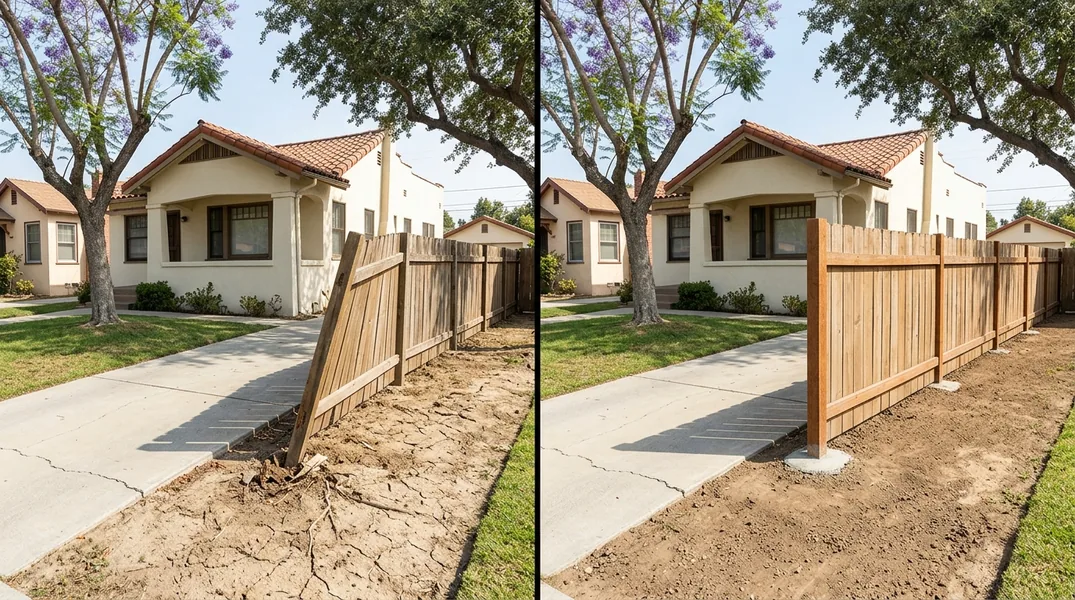
Understanding Santa Ana Winds and Their Impact on Privacy Fences
Every autumn, Los Angeles residents brace themselves for the arrival of Santa Ana winds, those powerful, dry gusts that sweep down from the high desert toward the Pacific coast. These winds can exceed 60 miles per hour, turning what seems like a routine fall season into a serious challenge for homeowners with outdoor structures, especially privacy fences. If you've invested in a privacy fence to create a secure, peaceful boundary around your property, understanding how these seasonal winds affect your installation is crucial to protecting that investment.
The Santa Ana wind season typically runs from October through April, with peak intensity occurring in late autumn and early winter. These winds are notoriously destructive because they're not just strong, they're also exceptionally dry and can push against large, flat surfaces like privacy fences with tremendous force. A poorly constructed or inadequately anchored fence can experience significant stress during these events, potentially leading to leaning, warping, or even complete failure. This is why proper installation, maintenance, and understanding local building codes aren't just administrative requirements, they're essential safeguards for your property.
Do I Need a Permit for a Fence in Los Angeles?
The short answer is yes, in most cases you will need a permit before installing a fence in Los Angeles. The Los Angeles Department of Building and Safety requires permits for fence installations to ensure that structures meet safety standards and won't create hazards for your neighbors or the broader community. This requirement exists partly because fences must be engineered to withstand local environmental conditions, including those powerful Santa Ana winds. When you obtain a permit, your fence design is reviewed by city officials to confirm it meets structural and safety requirements for your specific area.
The permitting process involves submitting plans that show your fence's height, materials, setback from property lines, and construction details. For Wood & Privacy Fence Installation, this typically means providing specifications about post depth, spacing, wood grade, and foundation methods. The city wants to ensure that your fence won't topple during high winds or create other safety issues. Skipping the permit process might seem like a shortcut, but it can result in fines, forced removal of your fence, or legal disputes with neighbors. It's always better to do things properly from the start.
Fence Height Regulations and Wind Resistance in Los Angeles
Fence height regulations in Los Angeles vary depending on your zone and location, but the general rule is that residential privacy fences cannot exceed six feet in height in most areas. However, some neighborhoods and HOA communities have stricter limits, often capping fences at five feet or even four feet in certain locations. These height restrictions exist for several reasons, including sight line safety at intersections, neighborhood aesthetics, and importantly, structural stability during high winds. A taller fence presents a larger surface area for wind to push against, which is why local code enforcement takes height seriously, especially in a region prone to seasonal wind events.
When Santa Ana winds arrive, the physics of fence design become very real. A six-foot privacy fence made of solid wood creates significant wind load, meaning the force exerted by wind pressure increases dramatically with height. This is why proper post installation, adequate spacing, and quality materials are non-negotiable. If you're planning a privacy fence installation and want to maximize height while staying compliant, your contractor should be familiar with local fence height regulations and how they interact with wind load calculations. When you contact Los Angeles Fence Company for a free estimate, our team can review your specific property and local code requirements to design a fence that's both tall enough for privacy and stable enough to handle seasonal winds.
HOA Approved Fence Designs: Navigating Community Standards
If you live in a homeowners association community in or around Los Angeles, you'll need to obtain approval from your HOA before installing any fence. An hoa approved fence must meet both city code requirements and your community's architectural guidelines, which can be even more stringent than municipal standards. Many HOAs in the Los Angeles area have specific requirements about fence materials, colors, styles, and heights. Some communities only allow certain wood types or finishes, while others might restrict privacy fences to specific areas of your property. These rules exist to maintain neighborhood consistency and property values, but they do add an extra layer of planning to your project.
Working with an HOA approval process requires patience and attention to detail. You'll typically need to submit architectural review forms showing your proposed fence design, materials, dimensions, and sometimes even photos or renderings. Approval can take anywhere from two to six weeks, depending on your HOA's review schedule. The good news is that professional fence contractors in Los Angeles are accustomed to navigating HOA requirements and can often help you prepare submissions that meet approval standards on the first try. Before you invest time and money in planning, it's worth confirming that your desired design will be approved by your HOA and that it complies with city regulations regarding wind resistance and structural integrity.
Wood & Privacy Fence Installation Cost in Los Angeles: What to Budget
The pricing for Wood & Privacy Fence Installation in Los Angeles depends on several factors, including the linear footage of fence needed, the type and grade of wood selected, local labor costs, permit fees, and site conditions. On average, homeowners can expect to pay between $25 and $50 per linear foot for a quality privacy fence installation, though premium materials or complex installations may cost more. A 100-foot fence, which is a common residential run, could therefore range from $2,500 to $5,000 or higher depending on specifications. The fence permit cost itself typically ranges from $100 to $300, depending on your city and the scope of the project, so that's an additional expense to factor into your budget.
When evaluating cost, remember that a properly engineered fence designed to withstand Santa Ana winds may cost more upfront but will save you money in the long run by avoiding wind damage, repairs, and potential replacement. Cheaper installations that cut corners on post depth, foundation quality, or wood grade often fail during seasonal wind events, resulting in expensive emergency repairs or complete reinstallation. It's worth getting multiple quotes from reputable contractors and asking specifically how they design for wind load and whether their pricing includes permit costs, site preparation, and foundation work. Los Angeles Fence Company can provide detailed pricing information and help you understand what's included in your estimate. Call us at (323) 859-1615 or request a free estimate to get accurate numbers for your specific project.
Preparing Your Fence for Santa Ana Season: Maintenance and Inspection
Once your privacy fence is installed, preparing it for Santa Ana winds requires regular maintenance and seasonal inspection. Before autumn arrives, walk your property line and look for any signs of weakness, including leaning posts, loose boards, or separation between boards and posts. Check that all fasteners are tight and that there are no cracks or splits in the wood that might weaken structural integrity. If your fence was installed several years ago, it's especially important to inspect it thoroughly, as wood naturally weathers and fasteners can loosen over time. A simple maintenance routine now can prevent costly damage when high winds arrive.
If you notice any damage or instability during your inspection, it's worth calling a professional to assess the situation and make repairs before wind season peaks. Sometimes a few new bolts, replacement boards, or additional bracing can make the difference between a fence that survives the season intact and one that fails. If your existing fence is aging or shows signs of significant damage, you might consider upgrading to a new installation designed with current wind load standards in mind. Whatever approach you take, don't wait until after the first big wind event to address fence issues. Proactive maintenance and timely repairs are your best defense against Santa Ana wind damage.
Looking for a professional fence contractor in Los Angeles? Los Angeles Fence Company responds fast for all your fence needs.
Get a Free Quote